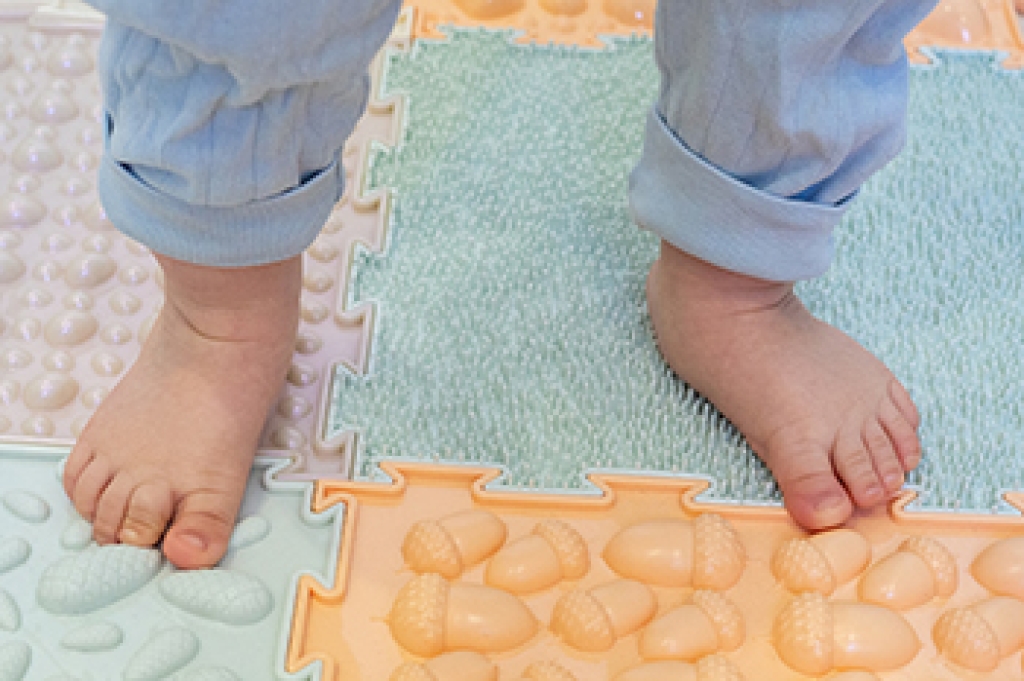
Flat feet in children occur when the arch on the inside of the foot appears low or touches the ground while standing. This condition is common in younger children because the arches are still developing. In many cases, the arch becomes more noticeable as a child grows. Some children inherit flat feet from family members. Many children with flat feet have no pain and continue normal activities without difficulty. Parents may notice that their child’s feet roll inward, shoes wear unevenly, or the child stands with the feet turned outward.
Some children with flat feet have pain in the arch, heel, or ankle, especially after long periods of activity. Other children report tired feet and legs after sports or playground activities. A child may also complain of aching in the calf muscles. In certain cases, a tight calf muscle contributes to the flattening of the foot. The calf muscle is located on the back of the lower leg and helps control movement at the ankle. When it is tight, extra stress can be placed on the foot.
A podiatrist can determine the type of flatfoot your child has. Flexible flat feet have normal foot movement and an arch that appears when the child stands on tiptoes or sits down. Rigid flat feet have limited movement and remain flat regardless of position. Treatment focuses on reducing discomfort and improving function rather than changing the shape of the foot. Options include stretching exercises, supportive shoes, and custom orthotics. Activity changes can also help reduce strain. Most children respond well to conservative care and remain active. If your child has pain from flat feet, it is suggested that you make an appointment with a podiatrist for an exam and treatment options.
The health of a child’s feet is vital to their overall well-being. If you have any questions regarding foot health, contact Deborah Rosenfeld of Rosenfeld Podiatry. Our doctor can provide the care you need to keep you pain-free and on your feet.
Tips for Keeping Children's Feet Healthy
- Make sure their shoes fit properly
- Look for any signs of in-toeing or out-toeing
- Check to see if they have Clubfoot (condition that affects your child’s foot and ankle, twisting the heel and toes inward) which is one of the most common nonmajor birth defects.
- Lightly cover your baby’s feet (Tight covers may keep your baby from moving their feet freely, and could prevent normal development)
- Allow your toddler to go shoeless (Shoes can be restricting for a young child’s foot)
- Cut toenails straight across to avoid ingrown toenails
- Keep your child’s foot clean and dry
- Cover cuts and scrapes. Wash any scratches with soap and water and cover them with a bandage until they’ve healed.
If you have any questions, please feel free to contact our office located in Marlton, NJ . We offer the newest diagnostic and treatment technologies for all your foot care needs.


